
Central Hot Water Systems for Mass Housing and Residences
Block-based central systems in residential developments with hundreds of independent units deliver economies of scale, shared solar energy and lower operating cost instead of per-unit boilers.
- Two peak windows
- Morning + Evening
- Storage factor
- 1.25
- Central system architecture
- Per block
Two peak windows
Storage factor
Central system architecture
Demand profile
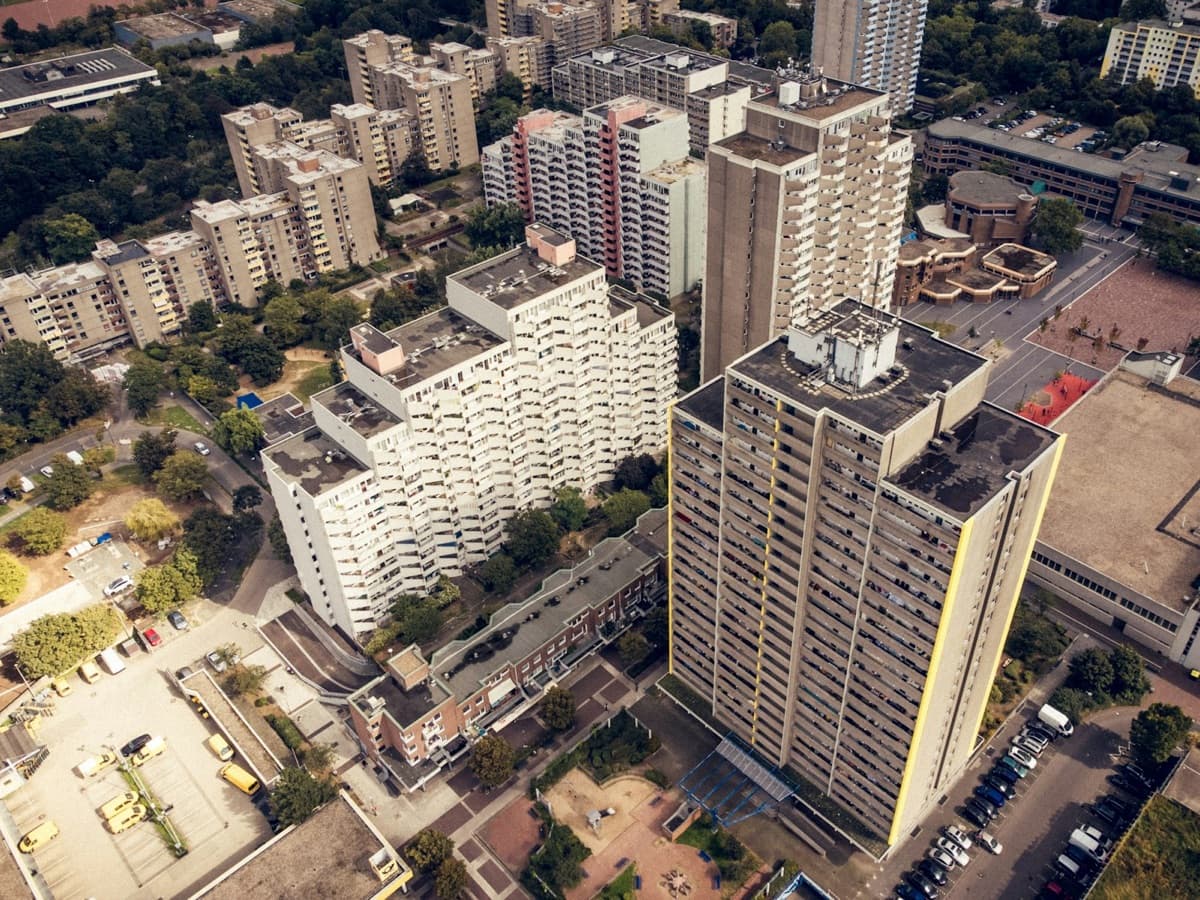
Unlike the model where every unit has its own boiler, in mass housing and residences a block or tower is fed from a single plant. During the morning 06:30-08:30 and evening 19:00-21:30 peaks the proportion of units drawing hot water simultaneously (simultaneity 0.30) is considerably higher than individual-boiler sizing assumes; a storage factor of 1.25 is therefore applied to ensure adequate volume. In projects with hundreds of units, shared solar collector investment markedly shortens the payback period per unit. Omega Boyler manufactures accumulation and double-coil boiler equipment in capacities proven on TOKİ and private housing projects.
How hot-water demand is distributed across the day determines the right storage and recovery capacity.
Sector hot-water challenges
Synchronising hundreds of independent units
Demand from hundreds of families with different lifestyles arrives in a distributed but meaningfully overlapping pattern. For the central system to balance this, a storage factor of 1.25 must be applied so that overnight charging stores a sufficiently large volume.
Operating cost management and energy sharing
Fairly allocating shared fuel or electricity cost and keeping management simple requires metering infrastructure and automation integration. Distributing solar savings across all blocks requires careful legal and technical planning.
Per-block sizing and redundancy
Each block or tower should be sized as its own heat centre; a fault in one must not affect another. This approach also lets servicing and replacement work proceed without interrupting other blocks.
TOKİ specification compliance
Publicly-supported projects require specific technical specifications for capacity, materials and pressure resistance. Documentation and certification can be decisive in the tender process.
The Omega solution
For mass housing projects Omega typically specifies a large accumulation tank and double-coil boiler combination per block. The boiler running at full load overnight fills the store for daytime demand; this keeps boiler power small while maintaining high peak-coverage capacity. Solar collectors connect to the second coil and can reduce annual gas or fuel cost by fifteen to forty percent. A buffer tank separates the heating circuit from the hot water circuit and raises overall system efficiency.
Recommended products
Accumulation Tank
50 L – 5,000 L. Enamel-lined accumulation tank for domestic hot water.
View product →Double Coil Boiler
160 L – 5,000 L. Double-coil boiler for combined boiler + solar panel installations.
View product →Solar Boiler (500 – 1,250 L)
500 L – 1,250 L. High-capacity solar boiler for larger installations.
View product →Buffer Tank
50 L – 5,000 L. Buffer tank providing buffer volume in heating circuits.
View product →Capacity & selection guide
The table below shows recommended guide capacities by block size, calculated using 150-200 L per unit per day and a simultaneity factor of 0.30.
| Scale | Demand | Recommendation |
|---|---|---|
| 20-40 units (small block) | 4,500-10,000 L/day peak | 1,500 L double-coil boiler + 2,000 L accumulation tank |
| 40-80 units | 10,000-20,000 L/day peak | 2,500 L boiler + 4,000 L accumulation (2 tanks parallel) |
| 80-160 units (tower) | 20,000-40,000 L/day peak | 5,000 L boiler + 2 x 5,000 L accumulation + solar integration |
| 160+ units (large tower) | 40,000 L+ peak | Project-specific; grouped accumulation + buffer tank + automation |
Related reference projects
See all references →Kavaklıdere, Muğla
Muğla Kavaklıdere TOKİ
368 unitsDikili, İzmir
İzmir Dikili TOKİ
1,010 unitsBuharkent, Aydın
Aydın Buharkent TOKİ
272 apartmentsDulkadiroğlu, Kahramanmaraş
Kahramanmaraş Dulkadiroğlu TOKİ
634 unitsKırıkhan, Hatay
Hatay Kırıkhan Güneşten Site
430 unitsFrequently asked questions
Is a central system or per-unit boiler more economical?
For multi-unit projects the central system is more economical long-term: economies of scale lower the capital cost per unit, shared solar collectors reduce fuel bills, and no in-unit devices or flues are needed. Maintenance is also managed from one point.
What does a storage factor of 1.25 mean?
It means providing storage capacity equal to 1.25 times the total daily demand. This extra twenty-five percent buffer keeps the system safe during extended evening peaks or gas supply interruptions.
Does servicing one block affect the others?
No. Each block runs independently with its own accumulation and boiler unit; a service event in one block does not interrupt hot water supply to the others.
Do you have references on TOKİ projects?
Yes. Our systems have been installed on multiple TOKİ projects including Mugla Kavaklidere, Izmir Dikili, Aydin Buharkent, Kahramanmaras Dulkadiroglü and Hatay Kirikhan. See our references page for detailed information.
Can solar collectors be added later?
Yes. The double-coil boiler model can easily be converted so the second coil connects to a solar circuit. Combined with the existing accumulation tank the retrofit investment has a short payback.
Let's determine the right system for your project together
Get a capacity calculation and quote based on your sector and facility load.