Short answer
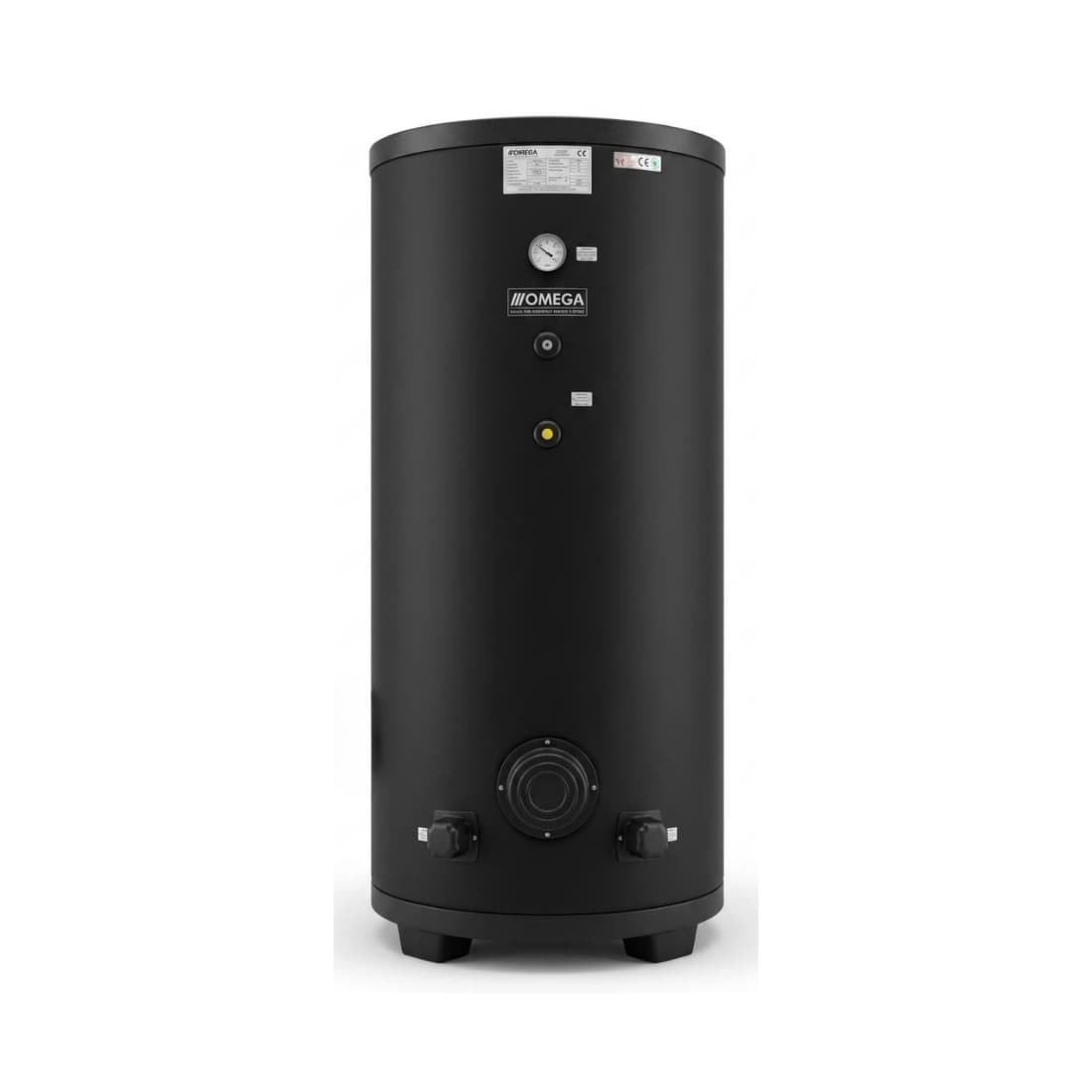
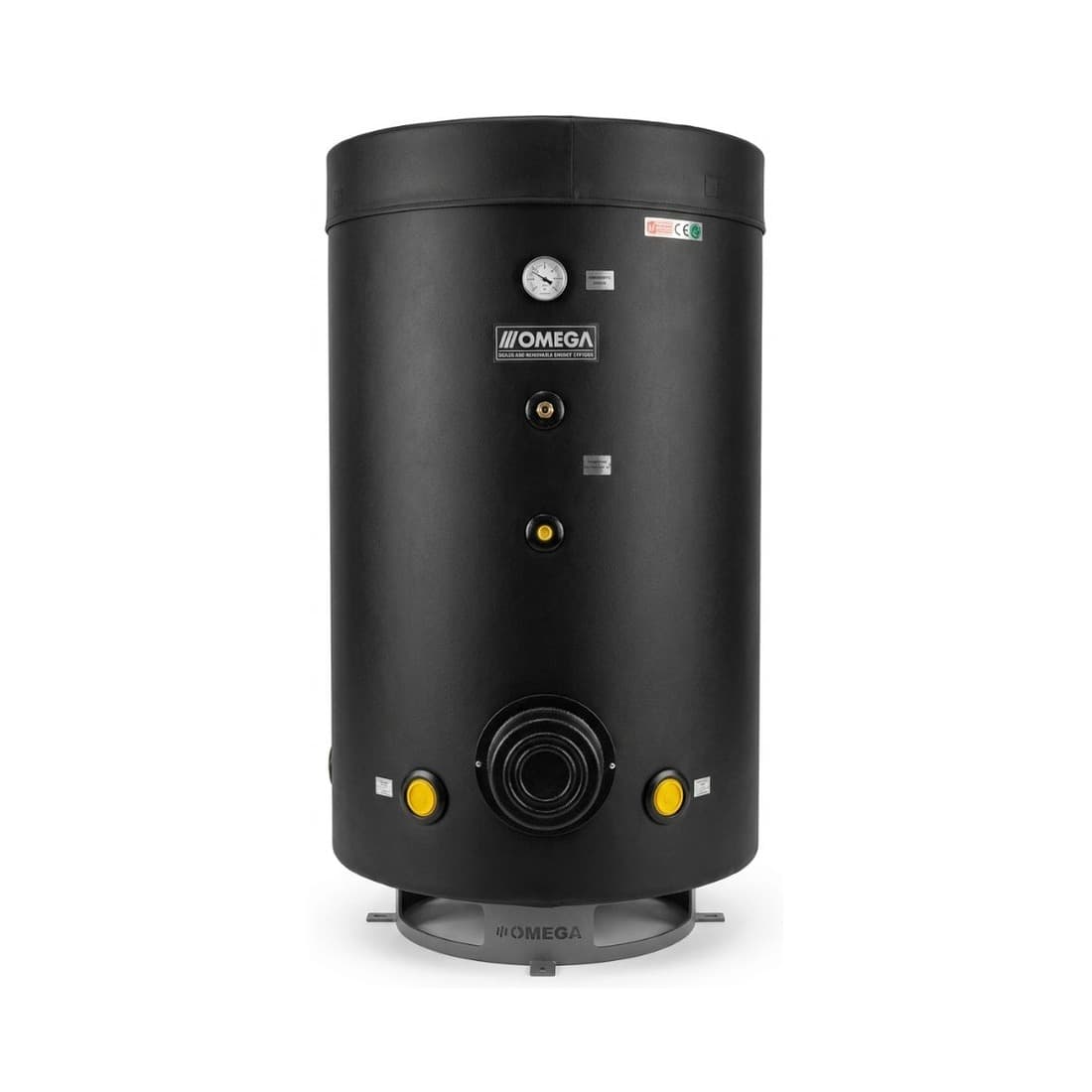
The difference in one sentence: An accumulation tank stores domestic hot water (the water reaching your taps); a buffer tank stores the heating circuit water (radiators, underfloor heating, the heat pump side). They are not interchangeable and are sometimes used together in the same facility. To increase domestic hot water capacity, the Accumulation Tank is the right product; to stabilize your heating system and extend equipment life, choose the Buffer Tank.
Accumulation tank: what it does and when it is needed
An accumulation tank separates production from consumption. While a boiler or central heating system heats water in the background, the tank stores it and discharges quickly at peak demand without requiring instantaneous power. The heart of the system works at a calm, efficient pace rather than chasing instantaneous demand.
When an accumulation tank is required
- Hotels, dormitories, bathhouses, and healthcare facilities with high simultaneous demand: distinct peak periods such as the morning pre-breakfast rush or evening check-in time.
- Large residential projects where a single boiler's recovery rate is insufficient.
- Existing facilities where comfort needs to be raised without increasing boiler capacity.
Sizing approach
The accumulation tank volume is determined by the difference between the selected boiler's hourly recovery capacity and the net peak-hour demand. A practical guide:
| Facility type | Tank volume guideline |
|---|---|
| Apartment (10-20 units) | 0.5-1.0 times the boiler volume |
| Small hotel (20-50 rooms) | 1.0-1.5 times the boiler volume |
| Large hotel / healthcare | 1.5-2.0 times the boiler volume |
Combined with a double coil boiler, this setup allows you to store both solar energy and boiler heat simultaneously in the same tank.
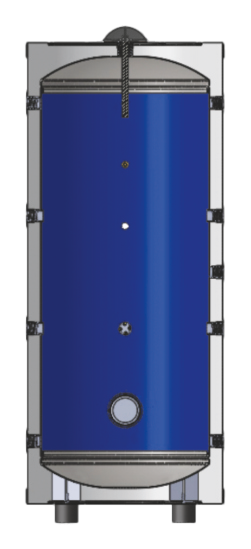 Accumulation tank cutaway diagram showing internal insulation, connection ports, and flow direction
Buffer tank: what it does and when it is needed
A buffer tank stabilizes the heating system by increasing the volume of circulating water in the heating circuit. When the heat source shuts down or demand fluctuates, the water inside the tank acts as thermal inertia against sudden changes.
Situations where a buffer tank plays a critical role
- Heat pump systems: Short cycling, where the compressor stops and starts at short intervals, causes energy inefficiency and premature failure. A buffer tank enables the compressor to run for longer periods, improving both efficiency and lifespan.
- Low-water-content modern boilers: Condensing boilers typically have a small internal water volume; a buffer tank increases the system's thermal inertia.
- Multi-zone or multi-source heating: Combines multiple heat sources or independent heating zones at a single hydraulic point.
- Defrost periods: Buffers the heat deficit during ice-defrost cycles in air-source heat pumps.
How a buffer tank integrates with the circuit
A buffer tank is connected between the production side (heat pump or boiler) and the distribution side (radiators, underfloor heating). It hydraulically decouples the two circuits, allowing each to operate at its own flow rate and temperature independently.
In facilities using the Heat Pump Boiler, a buffer tank is a core component of the system and should be planned together at the installation stage.
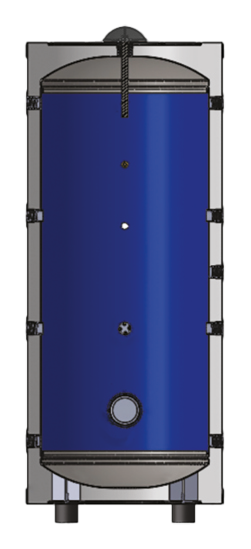 Buffer tank cutaway diagram showing heating circuit connections and hydraulic separation principle
Side-by-side comparison
| Criterion | Accumulation Tank | Buffer Tank |
|---|---|---|
| Water stored | Domestic hot water (drinking/bath/kitchen) | Heating circuit water (radiators/underfloor) |
| Core function | Cover peak hot water demand | Stabilize heating system, prevent short cycling |
| Typical location | Hotel, healthcare, dormitory, housing complex | Heat pump, condensing boiler, multi-zone heating |
| Benefit delivered | Higher comfort, expanded boiler capacity | Equipment lifespan, energy efficiency, stability |
| Hygiene requirement | Yes, 60°C storage and legionella protocol | No, closed-circuit water |
| Used with | Boiler, central heating, solar system | Heat pump, boiler, solar collector |
Can they be used together?
Yes. In large-scale facilities it is common to have both:
- The buffer tank stabilizes the heat pump and prevents short cycling.
- The accumulation tank stores domestic hot water and covers peak demand.
These are two distinct functions that cannot be served by the same tank. The right configuration depends on your facility's demand profile and heat source. Contact us for a facility-specific assessment.
Frequently asked questions
Is an accumulation tank the same thing as a boiler?
No. A boiler actively heats domestic water through a heat exchanger (coil). An accumulation tank only stores water that has already been heated; it contains no heating element of its own. The two are typically connected in series: the boiler heats, the accumulation tank stores.
Is a buffer tank mandatory for my heat pump?
While not a strict technical requirement, the vast majority of manufacturers specify a minimum water volume condition. Without a buffer tank, the compressor short-cycles, causing both energy inefficiency and potential warranty issues. It is strongly recommended for safe and efficient operation.
What size buffer tank do I need?
Buffer tank volume depends on the heat pump's capacity and the system's water volume. The general rule is 10-15 liters of buffer volume per kW of heat pump output. For example, a 12 kW heat pump requires a 120-180 liter buffer tank. For the precise size, use our boiler sizing tool or consult us directly.
Is there a Legionella risk in an accumulation tank?
Yes. Because an accumulation tank stores domestic hot water, water held below 60°C for an extended time becomes conducive to Legionella growth. Storage temperature must be maintained continuously at 60°C, with periodic thermal disinfection at 70°C at regular intervals. A buffer tank holds closed-circuit water, so this risk does not apply to it.
If you are unsure which tank or combination is right for your facility, use our boiler sizing tool or get in touch with us. You can browse our full product range on the products page.