Short answer
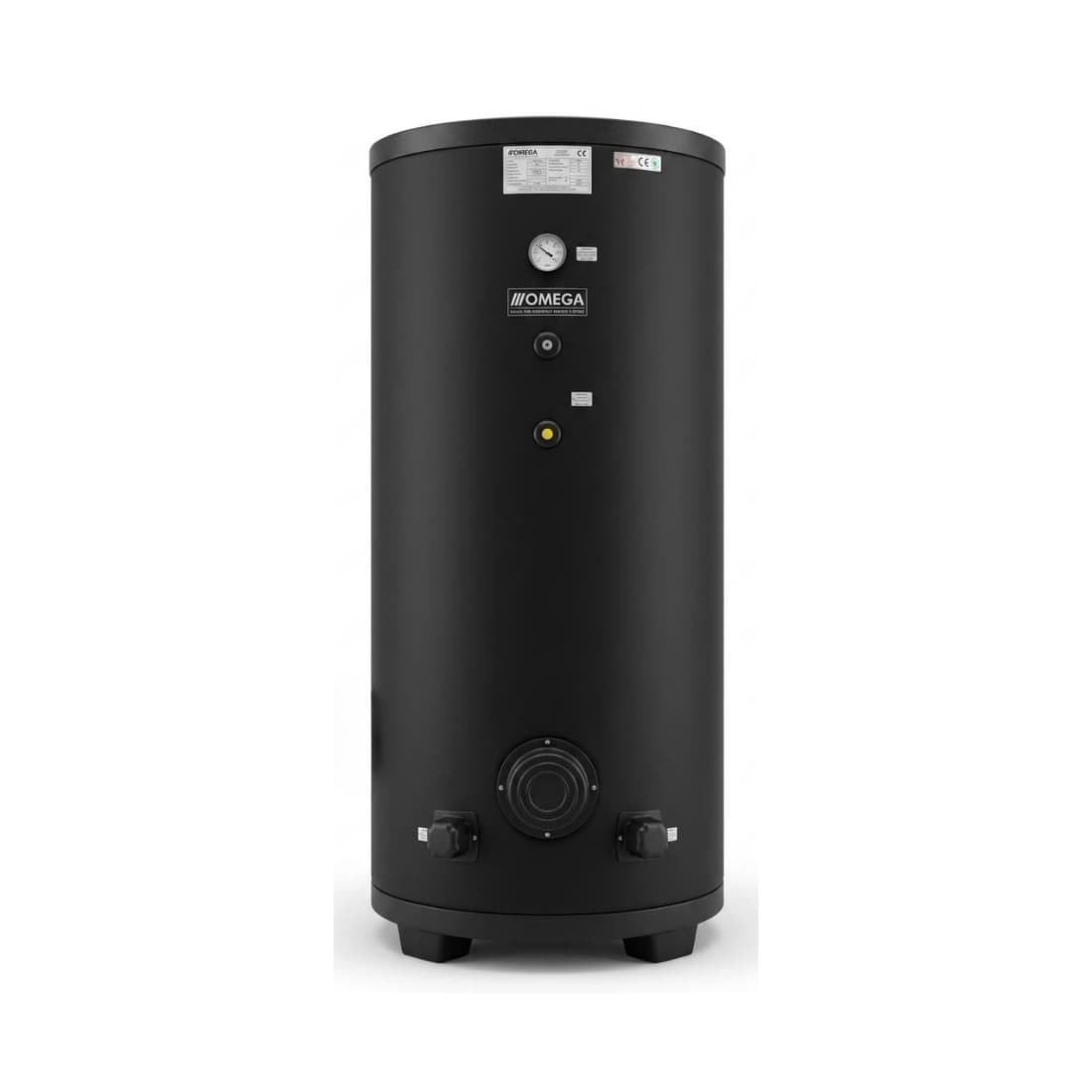
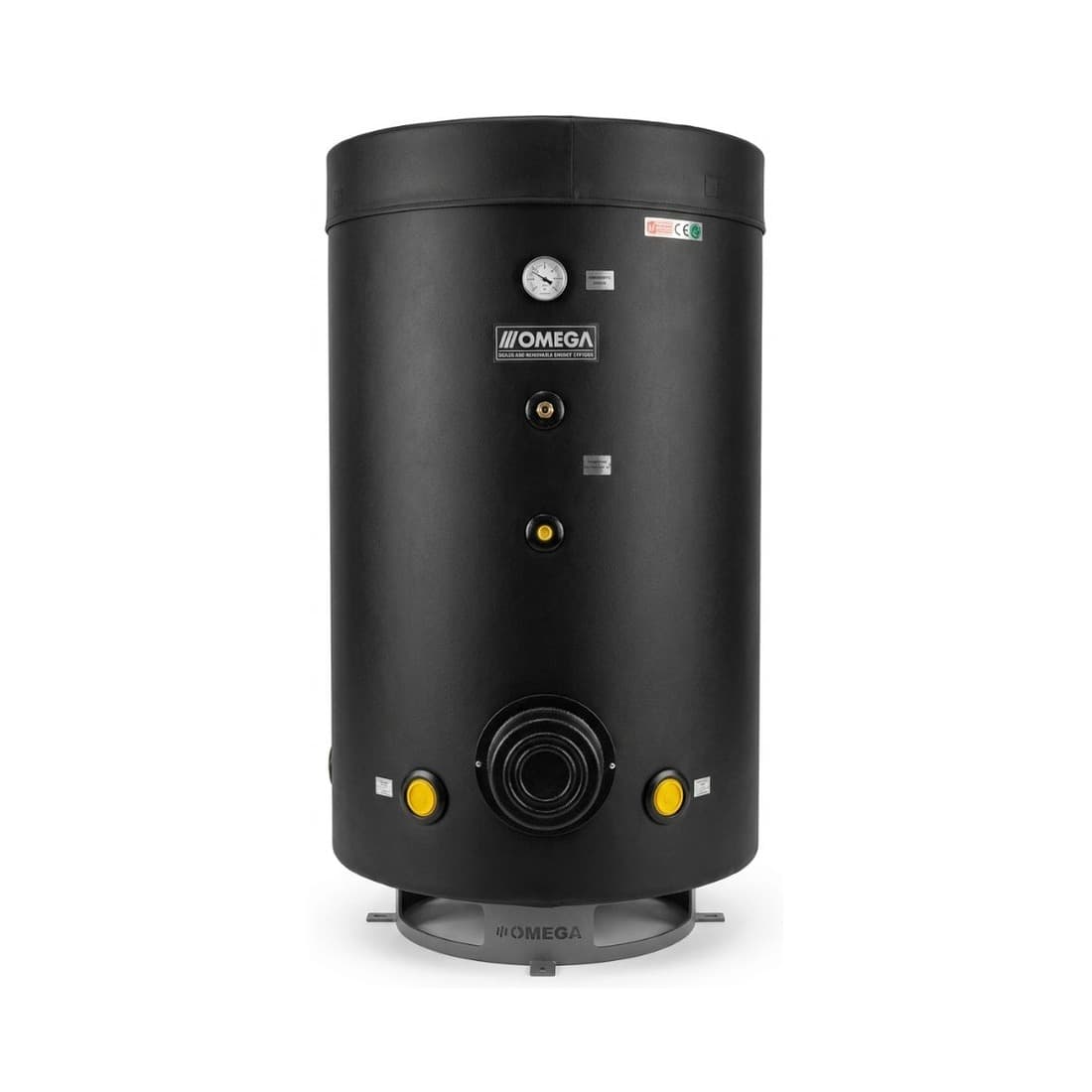
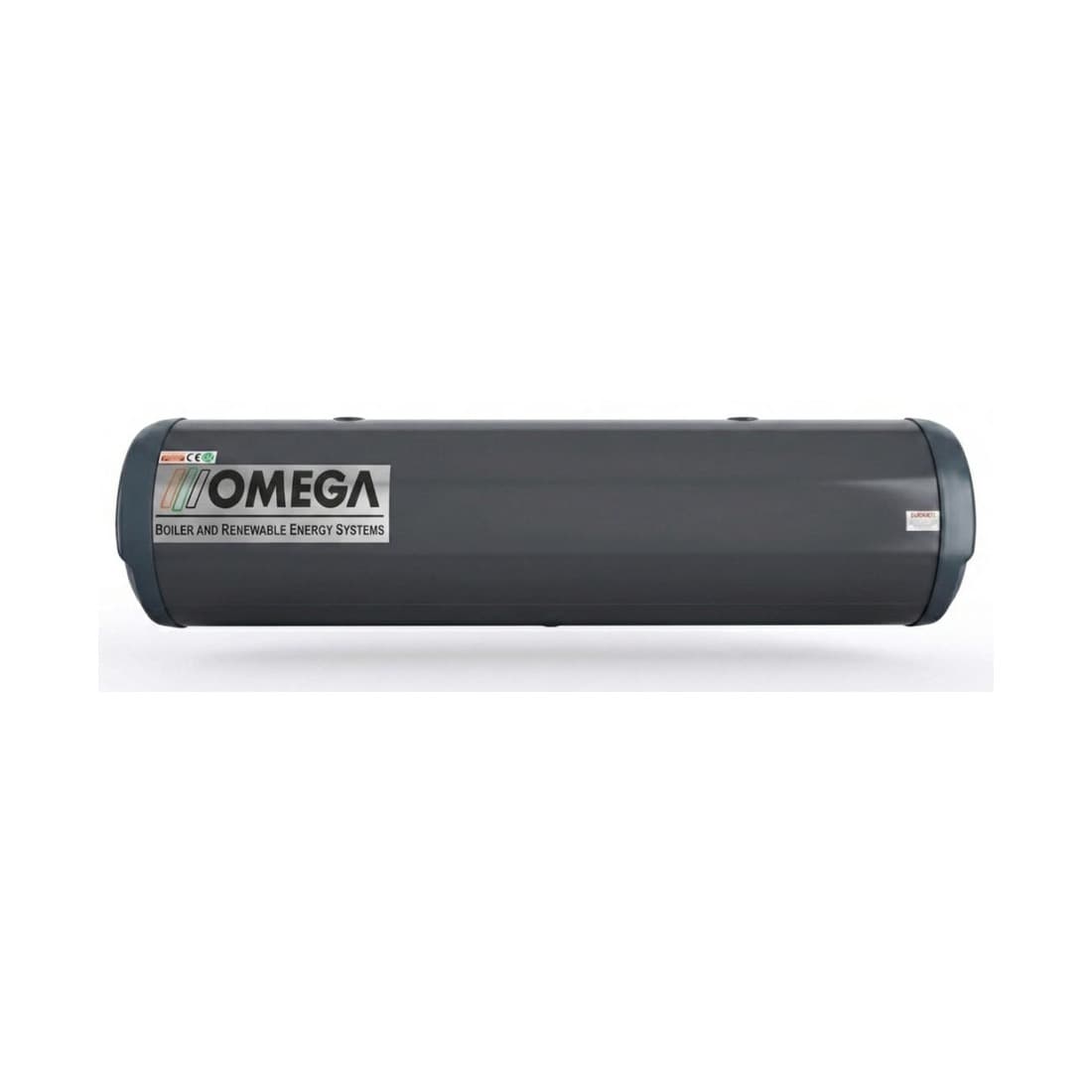
A solar boiler permanently reduces the hot water share of your energy bill by covering most of the annual domestic hot water energy from the sun. In southern and inland Türkiye, the annual solar contribution ranges between 60 and 75 percent, meaning the system pays for itself within a few years. For homes, the Solar Boiler (120-300 L) is suitable; for apartments and small facilities, the Solar Boiler (500-1,250 L) is the right size.
How to choose capacity
The basic measure is daily hot water consumption per person. In homes, 40-60 liters per person is used as the starting value; the solar system is then sized to heat that demand.
Residential capacity guide
| Household size | Daily consumption (50 L/person) | Recommended boiler capacity |
|---|---|---|
| 2 persons | 100 L | 120-150 L |
| 3 persons | 150 L | 150-200 L |
| 4 persons | 200 L | 200-250 L |
| 5-6 persons | 250-300 L | 250-300 L |
Stepping up one capacity size is recommended for heavy usage habits, colder inlet water in winter, and cloudy days. Cold inlet water is taken as 10°C and storage temperature as 60°C for reference calculations.
Apartment and facility scale
At apartment or small hotel scale, daily consumption is calculated directly, then a simultaneity factor (0.25-0.30) and a storage factor are applied. For these projects, the Solar Boiler (500-1,250 L) series and our boiler sizing tool clarify the sizing process.
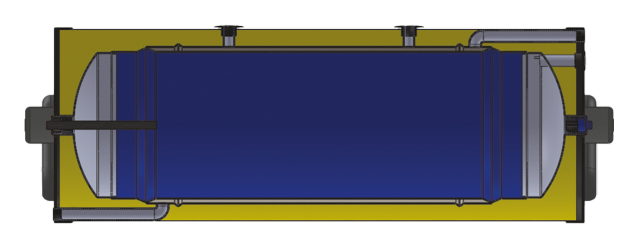 Solar boiler cutaway showing solar coil, backup electric element, and insulation layers
Factors that determine efficiency
Four core parameters determine a solar system's annual efficiency:
1. Regional sunshine hours
Türkiye is among the countries with the highest solar irradiation in Europe. Annual average sunshine hours vary by region:
| Region | Annual average sunshine | Estimated solar contribution |
|---|---|---|
| Aegean, Mediterranean, Southeast | 2,800-3,000 hours/year | 65-75% |
| Central Anatolia | 2,600-2,800 hours/year | 60-70% |
| Black Sea coast | 1,800-2,200 hours/year | 45-55% |
| Marmara, Thrace | 2,000-2,400 hours/year | 50-60% |
2. Collector area and orientation
South-facing collectors tilted between 30 and 45 degrees from horizontal maximize annual gain. The annual solar contribution varies significantly with different collector areas for the same household.
3. Tank insulation quality
A well-insulated tank minimizes heat loss during nighttime hours and cloudy periods. As heat loss decreases, the need for backup heating drops and the system's net saving increases.
4. Backup heat source integration
A backup source that activates when solar is insufficient maintains uninterrupted comfort. An electric heating element is the most common backup; for facilities with existing boiler infrastructure, boiler integration is preferred. To combine both sources in a single tank, the double coil boiler is purpose-built for this: the lower coil takes solar input, the upper coil takes the boiler.
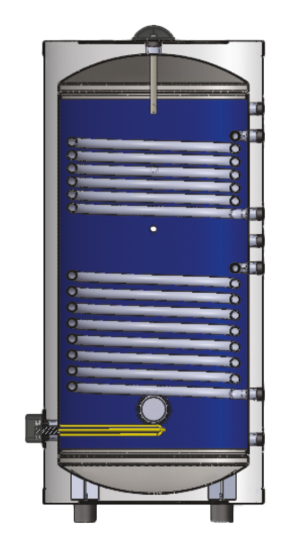 Double coil solar boiler technical diagram: solar collector circuit integration with the tank
Payback period: scenarios
Payback period depends on three variables: system cost, annual savings, and energy price. The table below shows indicative scenarios based on 2024 Turkish electricity price ranges and region-based solar contribution data.
| Scenario | Daily consumption | Annual solar contribution | Annual savings (kWh) | Estimated payback |
|---|---|---|---|---|
| 4-person household, Aegean | 200 L | 70% | ~1,400 kWh | 3-5 years |
| 4-person household, Marmara | 200 L | 55% | ~1,100 kWh | 4-6 years |
| 6-person household, Mediterranean | 300 L | 72% | ~2,100 kWh | 3-4 years |
| 20-unit apartment, Aegean | 1,000 L | 68% | ~7,000 kWh | 4-6 years |
Note: Savings are calculated using Q = m x c x ΔT (c = 1.16 Wh/kg°C, ΔT = 50°C difference). As energy prices rise each year, payback periods shorten, which is the core reason why investing today is attractive.
Large facility configuration: solar plus accumulation
At apartment, hotel or dormitory scale, combining the solar system with an accumulation tank delivers two critical advantages:
- Solar heat collected during the day is held in the tank and used rapidly during the evening peak demand.
- The boiler or solar collectors run during quiet hours; stored volume rather than instantaneous power handles the peak.
This configuration increases both solar contribution and the efficiency of existing infrastructure. In heat pump setups, planning the Heat Pump Boiler together with a solar system ensures consistently high efficiency during winter months when solar contribution drops.
Frequently asked questions
Does a solar boiler work in winter?
Yes, but at lower efficiency. Solar irradiation drops by 40-50 percent in winter months; a backup heating source therefore activates to maintain comfort. With a well-insulated tank and correctly sized collector area, meaningful savings are still achieved in winter.
How does a solar boiler compare to a heat pump?
A solar boiler operates at very low running cost during months of abundant sunshine. A heat pump performs efficiently in all seasons where air temperature is adequate. The two systems are complementary rather than alternatives: solar leads in summer, while the heat pump takes over in winter when sunshine is insufficient.
Can I add a solar system to my existing boiler?
Yes. If you have an existing single coil boiler, replacing it with a double coil model and adding solar collectors is the cleanest solution. Removable coil models make this transition even simpler; contact us for details.
How is collector count and area determined?
The general rule is 0.8-1.2 m² of collector area per person. For a four-person household, 3-5 m² of collector surface and a 200-250 liter boiler is a common sizing. Region, roof orientation, and usage habits all influence this figure.
Use our boiler sizing tool to see the right capacity and configuration. For a solar system tailored to your facility, get in touch with us and we will design the most efficient solution together.