
Short answer
A water heater is an insulated tank that stores the energy produced by a heat source as domestic hot water. A combi, boiler, solar collector, heat pump or electric element heats the water inside; the water heater stores it and delivers it without interruption the moment a tap is opened. By heat source there are coil, electric, solar and heat pump water heaters. You can reach every model from the Water Heater category and size the capacity you need with our water heater sizing tool.
What is a water heater?
A water heater does not produce hot water; it stores it. It generates no heat of its own. Instead it transfers energy taken from a heat source to the water and keeps that water hot inside an insulated body. This way, hot water stays ready to use even when the heat source is not running.
Three core features define a water heater:
- Enamel inner coating: Because the water inside goes straight to taps and showers, the inner surface is coated with hygienic, corrosion-resistant enamel.
- Cathodic protection (anode rod): A magnesium rod that protects the tank against electrochemical corrosion by sacrificing itself over time.
- Insulation: 50 mm or 75 mm of polyurethane/sponge insulation minimizes heat loss from the stored water.
These three features set a water heater apart from a buffer tank, which holds heating-circuit water: because a buffer tank's water never reaches a tap, it needs no inner coating.
How does a water heater work?
The working principle splits into two paths by heat source: coil (indirect) and electric (direct).
What is a coil?
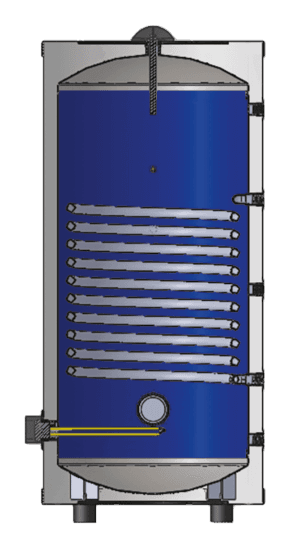
A coil is a curved pipe placed inside the tank that acts as a heat exchanger. Hot circuit water from a boiler or solar collector flows through this pipe; the domestic water outside the pipe is heated across the coil surface. The two fluids never mix at any point; only heat crosses the metal surface.
This separation matters: the water in the boiler circuit (a closed loop, often with additives) never touches the clean water you use in the shower. Thanks to the coil, two separate water circuits work together safely in a single tank.
Working principle of an electric water heater
In an electric water heater, a resistance element replaces the coil inside the tank. The element heats the water directly with electricity and a thermostat holds it at the set temperature. No separate boiler or collector is needed; the heat source sits inside the tank itself.
Water heater types
Water heater types separate along two axes: heat source (what heats the water) and form (how the tank stands). The first question that determines the right type is always the heat source.
By heat source
- Coil water heaters (single and double): The most common type, working with a boiler or central heating water. A single-coil water heater is the standard for facilities with one heat source; a double-coil water heater combines two sources (for example solar + boiler) in one tank.
- Removable copper coil water heaters: Designed so the coil can be pulled out and cleaned in hard-water regions. Removable copper single-coil and double-coil models make servicing easy.
- Electric and Smart series: Suited to standalone units without boiler infrastructure. The electric water heater covers the basic need; the Smart Series adds a touchscreen, remote connectivity and an antibacterial mode.
- Solar water heaters: Store the heat produced by a rooftop solar collector through a coil. The solar water heater is made in the 120-1,250 liter range. For a detailed efficiency and payback analysis, see our solar water heater guide.
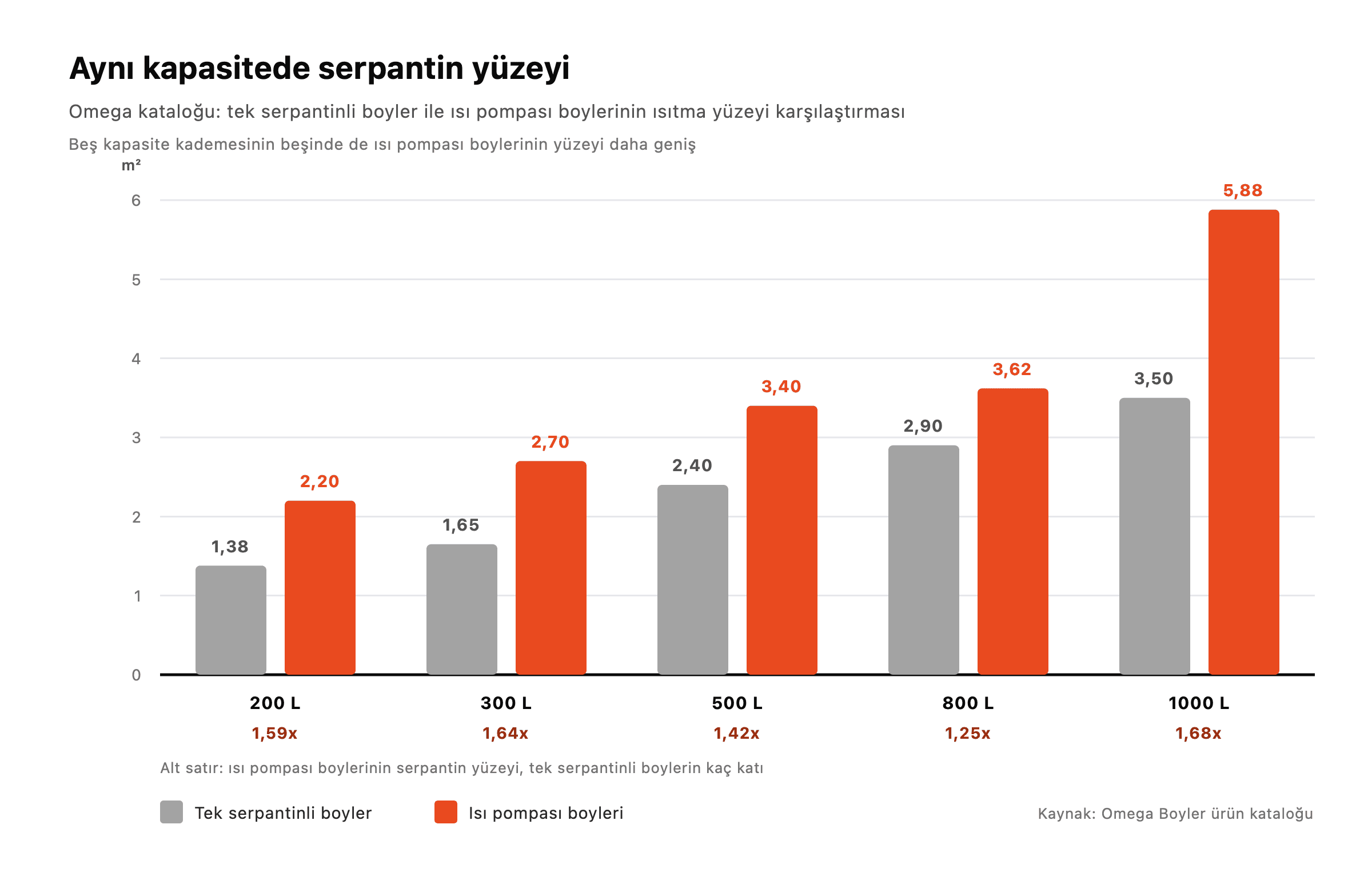
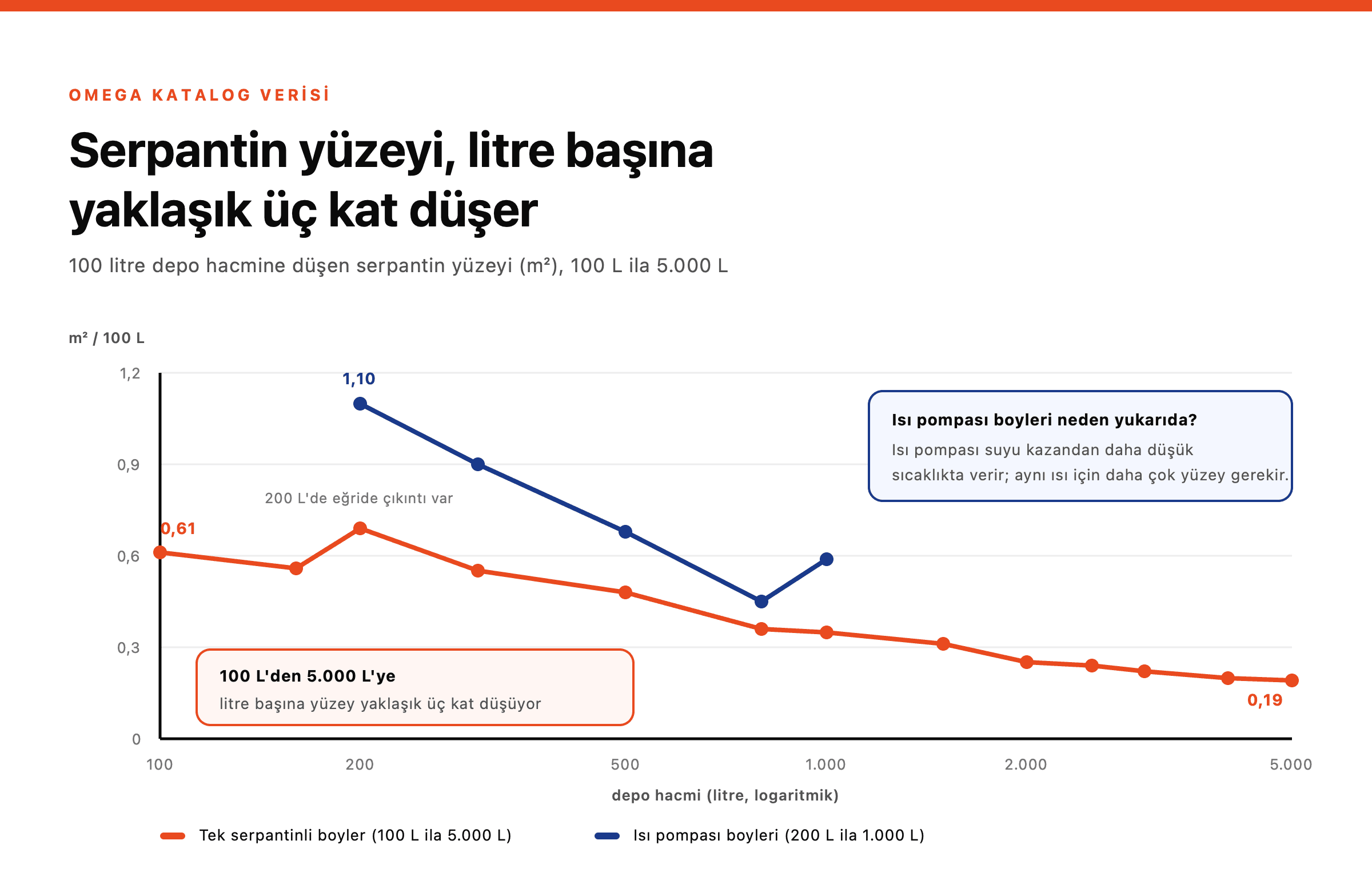
- Heat pump water heaters: Have a wide coil surface to efficiently transfer the low-temperature heat of an air-source heat pump. The heat pump water heater runs from 200 to 1,000 liters with high energy efficiency.
By form
Vertical models are the standard. In basements and plant rooms with limited ceiling height, a horizontal water heater fits the same volume into a lower body; where high heat transfer is required, the horizontal hairpin coil water heater is preferred.
| Water heater type | Heat source | Typical use |
|---|---|---|
| Single-coil | Boiler or solar (one source) | Residential, single-source facility |
| Double-coil | Two sources (solar + boiler) | Combined solar + combi setup |
| Electric / Smart | Electric element | Standalone unit without a boiler |
| Solar | Solar collector | High-insolation region |
| Heat pump | Heat pump | Efficiency-first home/villa |
| Horizontal | Boiler (horizontal form) | Low-ceiling plant room |
Where is a water heater used?
A water heater is used wherever continuous domestic hot water is needed at sufficient flow:
- Homes and villas: 120-300 liter coil, electric or heat pump water heaters cover daily shower and kitchen needs.
- Apartments and complexes: 500-1,000 liter double-coil water heaters, often with an accumulation tank, serve simultaneous multi-point demand.
- Hotels and healthcare: Capacities of 1,000 liters and above are supported by an accumulation tank for uninterrupted hot water at peak hours.
For the right capacity and type by facility scale, read our water heater selection guide.
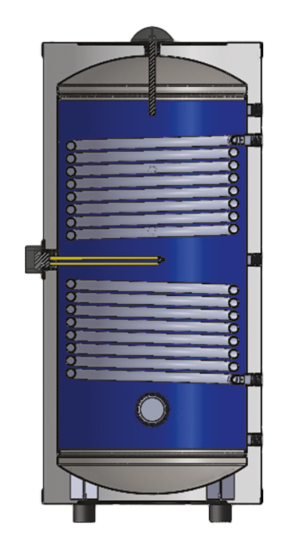 Cutaway showing the wide coil surface of a heat pump water heater
Water heater vs. thermosiphon vs. combi
These three terms are often confused but do different jobs:
- Combi: A device that heats water on demand; it does not store. A water heater stores; in most setups the combi is the heat source and the water heater is the tank, working together.
- Thermosiphon: Usually a rooftop-mounted individual product that combines a solar panel and a small tank in one unit. A water heater is a facility-scale tank connected to a central heat source. Omega makes facility-scale water heaters and tanks, not individual thermosiphons.
Frequently asked questions
What does a water heater do?
A water heater stores the hot water a heat source produces and delivers sufficient flow at peak demand. Instead of forcing the heat source to run constantly, the stored volume meets many users' demand at once.
How many liters should a water heater be?
The right capacity depends on the number of users, facility type and simultaneous hot-water demand. Homes are usually met with 120-300 liters, while hotels and healthcare facilities need 1,000 liters and above. For a numeric result, use our water heater sizing tool.
How much electricity does a water heater use?
Only an electric water heater consumes electricity directly; consumption depends on the element power (kW) and how often the water is reheated. In coil, solar and heat pump water heaters the heat source differs, so the water heater itself uses no electricity. A heat pump water heater, drawing heat from the air, offers the lowest running cost for the same hot water.
What is an anode rod and why does it matter?
An anode rod is a magnesium part that protects the tank from corrosion. It sacrifices itself over time so the tank steel does not, which is why it should be checked periodically and replaced when needed. The anode rod is the most critical maintenance item determining a water heater's lifespan.
What temperature should a water heater be set to?
Keeping the storage temperature at 60°C is recommended because it prevents Legionella bacteria from growing. Periodically raising it to 70°C for thermal disinfection is beneficial for hygiene. The Smart Series antibacterial mode does this automatically.
Use the water heater sizing tool to clarify type and capacity together, or if you need a custom setup for your facility, get in touch with us. Let's determine the right water heater together.